

Your health does not stay the same as you age, and neither should your approach to caring for it. Every decade of a woman's life brings new priorities, new risks, and new opportunities to catch problems before they become serious. Preventive care is not just about reacting to illness. It is about staying one step ahead so you can live fully, feel well, and spend less time managing avoidable health issues.
Whether you are in your 20s and just beginning to take charge of your health or in your 50s and navigating the changes that come with a new chapter of life, this guide is for you. Crabapple Medical Center in Alpharetta, Georgia is committed to supporting women at every stage with compassionate, personalized care that meets you exactly where you are.
Why Preventive Care Matters for Every Woman

Preventive care is one of the most powerful investments a woman can make. Routine exams, screenings, and check-ins allow your physician to detect early warning signs of conditions that show no obvious symptoms until they are advanced. Heart disease, cervical cancer, breast cancer, diabetes, and osteoporosis all fall into this category. Caught early, these conditions are far more treatable and far less disruptive to your life.
Beyond catching disease, preventive care gives you a relationship with a physician who knows your health history. That relationship becomes invaluable when something changes or when you need guidance navigating a health decision. Think of your annual visit not as something you do when something is wrong but as a regular conversation with someone who is invested in keeping you well.
The specific screenings and conversations that matter most shift with each decade of life. Here is what every woman should know and do, decade by decade.
In Your 20s: Building Your Health Foundation
Your 20s are an excellent time to establish healthy habits and start building a relationship with a primary care physician. Many young women feel invincible during this decade, which is exactly why this is the right time to set a strong foundation before life gets more complicated.
- Annual Well Woman Exam Every woman in her 20s should have an annual well woman exam. This visit covers your blood pressure, weight, reproductive health, and a general review of your lifestyle and mental health. It is also a space to ask questions about birth control, sexual health, and anything else on your mind.
- Pap Smear Current guidelines recommend that women begin Pap smears at age 21. A Pap smear screens for abnormal cervical cells that could indicate early cervical cancer or precancerous changes. Women aged 21 to 29 should have a Pap smear every three years if results are normal. This is one of the most effective cancer screenings available and should not be skipped.
- STI Screening Women under 25 who are sexually active are recommended to be screened for chlamydia and gonorrhea annually. Many STIs have no symptoms but can cause serious complications including infertility if left untreated. Your well woman exam is the right time to have this conversation with your doctor.
- Blood Pressure and Cholesterol Even in your 20s, blood pressure should be checked at least every two years. If you have a family history of heart disease or high cholesterol, your doctor may recommend earlier or more frequent cholesterol testing.
- Immunizations Your 20s are also the time to make sure your vaccinations are up to date. The HPV vaccine is recommended for women through age 26. Ensure you have had your Tdap booster and get a flu shot every year.
- Mental Health Mental health is an often overlooked part of preventive care. Anxiety and depression are common among women in their 20s, especially during major life transitions. Talk to your physician honestly about how you are feeling emotionally, not just physically.
In Your 30s: Balancing Life and Health
Life in your 30s often means juggling career, relationships, family, and personal goals. It is easy for your health to slip to the bottom of the list. This is the decade where consistency in preventive care becomes especially important, as some chronic conditions begin to develop quietly.
- Continued Pap Smears Women aged 30 to 65 should have a Pap smear combined with an HPV test every five years, or a Pap smear alone every three years. Talk to your doctor about which schedule is right for your situation.
- Blood Pressure and Cholesterol Monitoring Blood pressure checks should remain on your annual schedule. Cholesterol screening should happen at least every five years, or more often if you have risk factors. High blood pressure and elevated cholesterol rarely cause noticeable symptoms, making regular checks essential.
- Diabetes Screening If you are overweight, have a family history of diabetes, or experienced gestational diabetes during pregnancy, your doctor may begin screening you for prediabetes or type 2 diabetes in your 30s. Catching this early makes a significant difference in outcomes.
- Thyroid Function Women are significantly more likely than men to develop thyroid disorders, and the 30s are often when thyroid issues first appear. If you experience fatigue, weight changes, mood shifts, or sensitivity to temperature, ask your doctor about thyroid testing.
- Preconception and Prenatal Care If you are planning a pregnancy or are already pregnant, your 30s involve specific health conversations around folic acid, genetic screening, and prenatal vitamins. Even if pregnancy is not in your plans, your doctor should know so your care can be personalized accordingly.
- Skin Health Sun damage accumulates over time. Begin annual skin checks in your 30s, especially if you have fair skin, a history of sunburns, or a family history of skin cancer. Monthly self-exams are a smart habit to develop now.
In Your 40s: Staying Ahead of Change
Your 40s bring real shifts in hormone levels, metabolism, and body composition. This is also the decade when the risk for several significant conditions begins to rise. Staying proactive now can make an enormous difference in how you feel through your 50s and beyond.
- Mammograms The American Cancer Society recommends that women with average risk begin annual mammograms at age 45. Some guidelines suggest starting at 40. Talk with your doctor at Crabapple Medical Center about your personal risk factors and what schedule makes sense for you. Breast cancer caught early is highly treatable.
- Perimenopause Awareness Most women begin perimenopause sometime in their 40s, a phase that can last several years before the final menstrual period. Symptoms include irregular periods, hot flashes, sleep disruption, mood changes, and changes in libido. These are not things you simply have to endure. CMC offers personalized perimenopause care and weight management support for women navigating hormonal shifts.
- Heart Health Heart disease is the leading cause of death among women, yet many women do not think of it as their greatest health risk. In your 40s, your doctor should be assessing your cardiovascular risk more closely, including a review of blood pressure, cholesterol, blood sugar, and lifestyle factors. A baseline EKG may be appropriate depending on your history.
- Blood Sugar and Metabolic Health The risk for type 2 diabetes rises through the 40s. Annual fasting glucose tests and regular A1C checks help identify problems before they escalate. Metabolic changes during perimenopause can also affect how your body processes sugar.
- Eye and Dental Health Vision changes often begin in the early 40s. Annual eye exams become important at this stage. Regular dental cleanings and checkups also connect to overall health, as gum disease has links to heart disease and diabetes.
- Mental Health and Stress The 40s often bring heightened stress from caregiving responsibilities, career pressures, and major life transitions. Anxiety and depression remain common and deserve the same attention as physical health. Be open with your physician about your emotional wellbeing.
Schedule Your Well Woman Exam Today
Your health is worth prioritizing, and preventive care is the most effective way to protect it. If you are due for a well woman exam, a Pap smear, or simply a check-in with a physician who takes the time to listen, Crabapple Medical Center is here for you.
In Your 50s and Beyond: Protecting Your Long-Term Health
Your 50s mark a new chapter in women's health. Menopause typically arrives during this decade, and the years that follow bring important new screening priorities. This is the time to be your most proactive self.
- Menopause Management Most women reach menopause, defined as 12 consecutive months without a period, in their early 50s. Menopause itself is a natural transition, but its symptoms can significantly affect quality of life. Hot flashes, bone density loss, vaginal changes, mood shifts, and sleep problems are all treatable. Crabapple Medical Center offers individualized menopause symptom management so you do not have to simply push through.
- Bone Density Screening Estrogen plays a critical role in protecting bone density, and its decline during menopause accelerates bone loss. The DEXA scan, which measures bone density, is recommended for women at age 65 and for women at higher risk beginning at age 50. Osteoporosis is preventable and manageable when caught early.
- Colorectal Cancer Screening Women should begin colorectal cancer screening at age 45. Options include a colonoscopy every 10 years or stool-based testing more frequently. Colorectal cancer is highly treatable when detected early, and regular screening saves lives.
- Cardiovascular Risk Assessment Heart disease risk increases significantly after menopause. Annual blood pressure, cholesterol, and blood sugar monitoring become even more important. Discuss aspirin therapy and cardiovascular risk reduction strategies with your physician.
- Continued Mammograms and Pap Smears Breast cancer screening should continue through your 70s. Pap smears are recommended through age 65 for most women. Your physician at CMC will help you determine the right screening schedule based on your personal history.
- Urinary Health Urinary stress incontinence becomes more common as women age. Many women feel embarrassed to mention this, but it is a medical issue with real solutions. CMC offers evaluation and treatment plans, including pelvic floor therapy and other interventions, to help women regain comfort and confidence.
Healthy Habits Every Woman Should Practice at Every Age
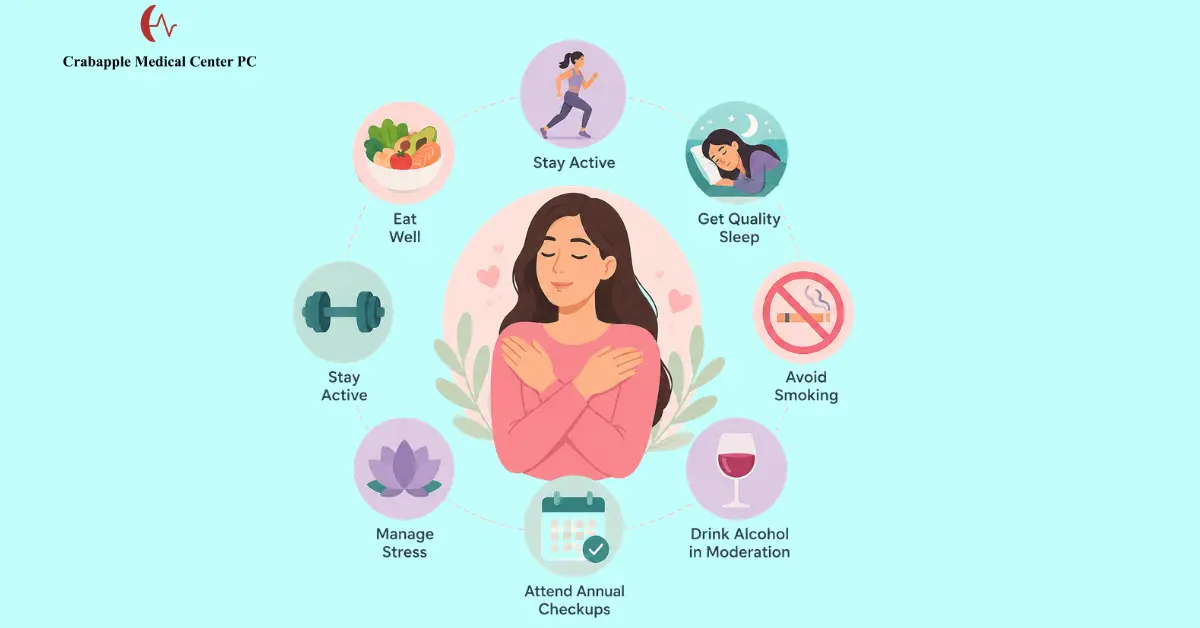
Preventive care goes beyond doctor visits. The choices you make daily have a profound impact on your health across every decade.
Aim for at least 150 minutes of moderate physical activity per week. Regular movement supports heart health, bone density, mood, and metabolism. Prioritize a diet rich in vegetables, lean proteins, whole grains, and healthy fats. Limit processed foods and added sugar. Get seven to nine hours of sleep each night. Sleep deprivation affects hormones, immunity, and mental health. Avoid smoking, and if you drink alcohol, do so in moderation. Manage stress through exercise, social connection, creative outlets, or mindfulness practices. And most importantly, show up for your annual appointments even when you feel perfectly fine.
Women's Care at Every Age, Right Here in Alpharetta
Whether you are 24 or 64, your health needs deserve expert attention. Crabapple Medical Center offers a full range of women's health services so you can get everything you need in one trusted place.
How Crabapple Medical Center Supports Women at Every Stage
Crabapple Medical Center in Alpharetta provides comprehensive women's health services designed to meet you at every decade of life. From routine Pap smears and birth control counseling to perimenopause support, urinary incontinence management, and menopause care, CMC's team offers expert, compassionate care in a warm and welcoming environment.
CMC also welcomes self-pay patients with transparent, upfront pricing. Women who are uninsured or between coverage never have to put their health on hold. Every service, from office visits to in-house labs and treatments, is clearly priced so there are no surprises.
Frequently Asked Questions
At what age should a woman start seeing a gynaecologist or primary care physician?
Women should begin seeing a physician for reproductive and general health care by age 21, or earlier if they become sexually active. Starting early helps establish a health baseline and builds a trusting relationship with a provider.
How often should I get a Pap smear?
Women aged 21 to 29 should have a Pap smear every three years. Women aged 30 to 65 should have a Pap smear combined with an HPV test every five years, or a Pap smear alone every three years. Your doctor will advise based on your personal health history.
When should I start getting mammograms?
Most guidelines recommend beginning annual mammograms at age 45, though women with higher risk factors may start at 40. Discuss your family history and personal risk with your physician at Crabapple Medical Center to determine the right schedule for you.
Is osteoporosis something I need to worry about in my 40s?
Bone density loss begins gradually in your 30s and accelerates after menopause. Building strong bones through calcium, vitamin D, and weight-bearing exercise in your 40s is an important investment. Bone density screening is typically recommended starting at age 65, or earlier for women with risk factors.
What is a well woman exam and what does it include?
A well woman exam is a comprehensive annual visit that covers blood pressure, weight, reproductive health, breast exam, and a review of your overall physical and mental health. It may include a Pap smear, STI screening, and immunization review depending on your age and history.