
A heart attack does not always look like the dramatic scene many people imagine. There may be no sudden collapse or severe crushing chest pain. For some women, the warning signs can begin with unusual fatigue, nausea, shortness of breath, back discomfort, or a feeling that something simply is not right.
Recognizing heart attack symptoms in women is especially important because symptoms that seem mild or unrelated to the heart can still signal a serious medical emergency.
Heart disease remains a major health concern for women, and heart attacks can happen at any stage of adulthood, especially when cardiovascular risk factors are present. Understanding the symptoms, knowing your personal risks, and responding quickly can protect your heart and potentially save your life. Heart disease remains a leading cause of death among women in the United States.
At Crabapple Medical Center, we encourage women to make cardiovascular health part of their preventive healthcare routine. Knowing your blood pressure, cholesterol, blood sugar, family history, and other risk factors can help identify problems before an emergency occurs.
What Happens During a Heart Attack?
A heart attack, medically known as a myocardial infarction, occurs when part of the heart muscle does not receive enough oxygen-rich blood.
The most common cause is coronary artery disease. Over time, cholesterol and other substances can accumulate inside the coronary arteries and form plaque. If a plaque rupbtures and a blood clot develops, blood flow through the artery may become severely reduced or completely blocked.
Without enough oxygen, heart muscle begins to become damaged. The longer blood flow remains restricted, the greater the potential damage to the heart. This is why getting emergency medical treatment quickly is so important.
Why Can Heart Attack Symptoms in Women Look Different?
One of the most important misconceptions about women's heart health is that women do not experience chest pain during a heart attack.
They absolutely can.
Chest pain or discomfort remains the most common heart attack symptom in women as well as men. However, women may be more likely to experience additional symptoms that are not immediately recognized as being related to the heart. These can include nausea, unusual fatigue, weakness, shortness of breath, or discomfort in the back, shoulder, neck, jaw, or upper abdomen.
This can make recognition more difficult.
A woman who suddenly feels exhausted or nauseated may assume she is getting sick. Upper abdominal discomfort may be mistaken for indigestion. Jaw or back pain may be blamed on muscle tension. Shortness of breath may be attributed to stress or anxiety.
There are also biological differences in cardiovascular disease. Women are more likely than men to experience some conditions involving the heart's smaller blood vessels, including coronary microvascular disease. Research continues to examine how these differences influence symptoms, diagnosis, and treatment.
The important point is not that every woman's heart attack looks different. It is that women should not wait for severe chest pain before taking other concerning symptoms seriously.
Most Common Heart Attack Symptoms in Women
Heart attack symptoms vary from person to person. They may appear suddenly, develop gradually, disappear and return, or occur in combination.
Warning signs can include:
- Pressure, squeezing, fullness, tightness, burning, or pain in the chest
- Pain or discomfort in one or both arms
- Upper back or shoulder discomfort
- Neck or jaw pain
- Shortness of breath, with or without chest discomfort
- Nausea or vomiting
- Unusual or extreme fatigue
- Dizziness, weakness, or lightheadedness
- Cold sweating
- Discomfort in the stomach or upper abdomen
Some women may experience several symptoms at the same time, while others may notice only one or two. The American Heart Association emphasizes that chest discomfort remains the most common symptom, but symptoms such as shortness of breath, upset stomach, upper body pain, unusual tiredness, and weakness can also occur.
Chest Pressure or Discomfort
Chest discomfort deserves immediate attention.
Heart attack related discomfort is not always an intense, stabbing pain. It may feel like pressure, heaviness, squeezing, fullness, burning, aching, or tightness in the center or left side of the chest.
The sensation may last several minutes or disappear and return.
Do not assume that mild chest discomfort cannot be serious. If new or unexplained chest pressure occurs, especially with sweating, nausea, shortness of breath, weakness, or pain elsewhere in the upper body, emergency evaluation is necessary.
Shortness of Breath
Shortness of breath can occur during a heart attack with or without chest pain.
You may suddenly feel as though you cannot take a deep enough breath, become unusually winded during an activity that is normally easy, or have difficulty breathing while resting.
Because shortness of breath has many possible causes, people sometimes wait to see whether it improves. When it appears suddenly or together with other possible heart attack symptoms, it should not be ignored.
Unusual or Extreme Fatigue
Fatigue is common and is usually not caused by a heart attack. What matters is a significant, unexplained change from how you normally feel.
Some women experiencing a heart attack report unusual weakness or tiredness. Everyday activities may suddenly feel more difficult than usual.
Fatigue becomes more concerning when it is new, severe, unexplained, or accompanied by symptoms such as chest discomfort, nausea, dizziness, sweating, or shortness of breath.
Nausea, Indigestion, or Upper Abdominal Discomfort
Heart attack symptoms can sometimes resemble digestive problems.
Nausea, vomiting, stomach discomfort, or sensations resembling indigestion can occur during a heart attack. Because these symptoms are commonly associated with food, reflux, stomach viruses, or other gastrointestinal conditions, their possible connection to the heart may not immediately come to mind.
New digestive symptoms deserve greater attention if they occur with shortness of breath, chest pressure, sweating, dizziness, jaw pain, or unusual weakness.
When you are unsure whether symptoms could be cardiac, it is safer to seek emergency evaluation rather than trying to diagnose the cause yourself.
Back, Shoulder, Neck, or Jaw Pain
Heart related discomfort does not have to remain in the chest.
Pain or pressure may be felt in the back, shoulders, arms, neck, or jaw. Some women describe upper back discomfort as pressure or squeezing rather than sharp pain.
Pain that appears suddenly without an obvious injury or that occurs alongside chest discomfort, nausea, sweating, or difficulty breathing should be taken seriously.
Dizziness, Weakness, or Cold Sweating
Feeling suddenly lightheaded, faint, weak, or unusually sweaty can also occur during a heart attack.
These symptoms become especially concerning when there is no obvious explanation or when they happen together with chest discomfort, shortness of breath, nausea, or upper body pain.
Do not attempt to drive yourself to the hospital if you believe you may be experiencing a heart attack. Call 911 so emergency medical professionals can begin evaluating and treating you as quickly as possible.
What Is a Silent Heart Attack?
A silent heart attack is a heart attack that causes no obvious symptoms, minimal symptoms, or symptoms that are not recognized as a heart attack.
The word "silent" does not mean harmless.
Heart muscle can still be damaged even when the person does not realize a heart attack occurred.
Symptoms may be mild and easily mistaken for other conditions. They can include indigestion, unusual tiredness, flu-like feelings, mild upper body discomfort, or discomfort in the jaw, arms, chest, or upper back.
According to CDC data, about 1 in 5 heart attacks overall are considered silent, meaning heart damage occurs without the individual being aware of the event.
A silent heart attack may sometimes be discovered later during medical evaluation through testing such as an electrocardiogram or cardiac imaging.
If you experience new or unexplained symptoms that could represent a heart attack, do not assume that mild symptoms mean you are safe.
Heart Attack vs Anxiety, Heartburn, or Indigestion
One reason heart attacks may be overlooked is that several symptoms overlap with much more common conditions.
Anxiety can cause chest tightness, rapid breathing, sweating, and dizziness. Acid reflux can cause burning or discomfort in the chest. Muscle strain can produce chest, shoulder, or back pain.
Unfortunately, symptoms alone cannot always reliably tell you which condition is responsible.
If chest discomfort or other concerning symptoms are new, severe, unexplained, worsening, or accompanied by shortness of breath, cold sweating, nausea, faintness, or pain in the jaw, arm, shoulder, or back, seek emergency care.
It is better to have symptoms evaluated promptly than to assume a potentially serious cardiac symptom is indigestion or stress.
Who Is at Higher Risk for Heart Disease in Women?
Understanding your personal risk is an important part of prevention.
Several well-established factors can increase the risk of heart disease and heart attack, including:
- High blood pressure
- High LDL cholesterol
- Diabetes
- Smoking
- Excess body weight
- Physical inactivity
- Family history of heart disease
- Increasing age
- Poor dietary habits
- Chronic stress
Women may also have cardiovascular risk factors connected to reproductive and pregnancy history. These can include gestational diabetes, hypertensive disorders during pregnancy, preterm delivery, polycystic ovary syndrome, and early menopause.
Having one or more risk factors does not mean that a heart attack is inevitable. It means that preventive care and appropriate monitoring become even more important.
Heart Disease in Women Can Develop Quietly
Heart disease does not always announce itself with obvious symptoms.
High blood pressure, high cholesterol, and early coronary artery disease may develop for years without making you feel sick. A person can feel healthy while cardiovascular risk is gradually increasing.
That is one reason routine primary care is so important.
Blood pressure measurement, cholesterol testing, blood sugar evaluation, weight management, family history review, and discussions about lifestyle habits can provide a clearer picture of cardiovascular risk before symptoms develop.
Preventive healthcare is not simply about treating problems after they appear. It is also about identifying risks early enough to change their course.
What Should You Do If You Think You Are Having a Heart Attack?
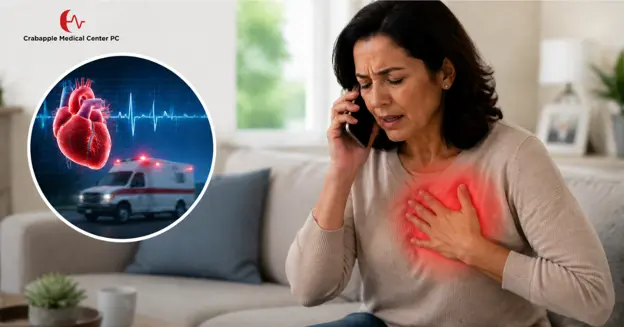
If you develop possible heart attack symptoms, especially chest pressure or discomfort, shortness of breath, cold sweating, nausea, unexplained weakness, or upper body pain, call 911 immediately.
Do not wait for symptoms to become severe.
Do not wait to see whether they disappear.
Do not drive yourself to the hospital when emergency medical services are available.
Calling 911 allows emergency professionals to begin care as quickly as possible and helps ensure you reach an appropriate medical facility safely. Faster treatment can reduce the amount of permanent damage to heart muscle.
Crabapple Medical Center provides preventive and ongoing healthcare, but suspected heart attack symptoms require emergency medical services rather than a routine office appointment.
How Women Can Lower Their Risk of Heart Disease
Many cardiovascular risk factors can be improved through preventive care and consistent lifestyle habits.
Know Your Blood Pressure
High blood pressure often produces no noticeable symptoms.
Regular blood pressure checks are important because uncontrolled hypertension increases the risk of heart disease and stroke. If you have high blood pressure, work with your healthcare provider to develop an appropriate treatment plan.
Monitor Cholesterol and Blood Sugar
High LDL cholesterol and diabetes are significant cardiovascular risk factors.
Routine laboratory testing can help identify changes before complications develop. Your healthcare provider can recommend how frequently these measurements should be checked based on your age, medical history, medications, and overall cardiovascular risk.
Stay Physically Active
Regular movement supports cardiovascular health, blood pressure management, blood sugar control, weight management, and overall wellness.
The American Heart Association generally recommends adults aim for at least 150 minutes of moderate intensity aerobic activity each week or 75 minutes of vigorous activity, along with appropriate muscle strengthening activity. Your healthcare provider can help determine what level of exercise is appropriate for you.
Choose Heart Healthy Foods
A heart supportive eating pattern emphasizes vegetables, fruits, whole grains, lean proteins, nuts, seeds, and other minimally processed foods while limiting excessive sodium, added sugar, and highly processed foods.
Healthy eating does not need to involve an extreme diet. Consistent food choices are more valuable than short term restrictions that are difficult to maintain.
Avoid Smoking
Smoking is a major modifiable risk factor for cardiovascular disease.
If you currently smoke, talk with your healthcare provider about evidence-based options that can support quitting.
Keep Up With Preventive Care
Regular healthcare visits give you an opportunity to review changes in blood pressure, cholesterol, blood sugar, weight, medications, lifestyle, family history, and other factors affecting your heart.
The goal is to identify cardiovascular risk before a medical emergency brings attention to it.
How Crabapple Medical Center Supports Women's Heart Health
At Crabapple Medical Center in Alpharetta, GA, we believe protecting your heart begins with understanding your individual health risks.
Our primary care team can help assess factors associated with heart disease in women, including blood pressure, cholesterol, blood sugar, weight, family history, lifestyle habits, and existing medical conditions.
Depending on your individual needs, preventive care may include routine health evaluations, laboratory testing, blood pressure management, cholesterol management, diabetes prevention or management, weight management, nutrition and lifestyle guidance, and coordination with specialists when appropriate.
Heart health is not something women should think about only after symptoms develop. Proactive care gives you an opportunity to identify risks earlier and build habits that protect your cardiovascular health over the long term.
Make Your Heart Health a Priority
Knowing the heart attack symptoms in women can help you recognize an emergency, but prevention is just as important.
Pay attention to changes in your body. Know your cardiovascular risk factors. Keep up with preventive screenings. Most importantly, never dismiss potentially serious symptoms simply because they do not match the dramatic heart attack symptoms commonly portrayed on television.
If you currently have chest discomfort, shortness of breath, unexplained sweating, nausea, weakness, or other symptoms that could indicate a heart attack, call 911 immediately.
Know Your Heart Risk Before It Becomes a Problem
No emergency symptoms, but want a clearer picture of your heart health? Our team at Crabapple Medical Center in Alpharetta, GA assesses your risk factors and helps you act early.
Frequently Asked Questions
What are the most common heart attack symptoms in women?
Chest pain or discomfort is the most common symptom in women. Other possible symptoms include shortness of breath, nausea, unusual fatigue, cold sweating, dizziness, and discomfort in the arms, back, shoulders, neck, jaw, or upper abdomen.
Can a woman have a heart attack without chest pain?
Yes. Although chest discomfort is the most common heart attack symptom, a heart attack can occur without obvious chest pain. Symptoms may instead include shortness of breath, nausea, weakness, unusual fatigue, dizziness, or upper body discomfort.
What does a silent heart attack feel like in a woman?
A silent heart attack may cause no noticeable symptoms or symptoms that are mild enough to be mistaken for something else. Possible signs include indigestion, unexplained fatigue, flu-like symptoms, or mild discomfort in the chest, upper back, jaw, or arms.
How do I know if chest discomfort is heartburn or a heart attack?
It can be difficult to distinguish the two based on symptoms alone. New or unexplained chest discomfort, particularly when accompanied by shortness of breath, sweating, nausea, dizziness, weakness, or discomfort elsewhere in the upper body, requires urgent medical evaluation.
Can younger women have heart attacks?
Yes. Heart attack risk generally increases with age, but younger women can still experience cardiovascular disease and heart attacks, particularly when risk factors such as high blood pressure, diabetes, high cholesterol, smoking, obesity, family history, or certain pregnancy-related conditions are present.