

You open your lab results and see a number next to A1C.
Maybe it says 5.4%, 5.9%, 6.3%, or 7.1%.
Unless someone has explained the test before, that percentage may not mean much. Is 5.9% good? Does 6.2% mean diabetes? What is considered too high? And what is a normal A1C in the first place?
For most people without diabetes, a normal A1C is below 5.7%. An A1C between 5.7% and 6.4% falls within the prediabetes range, while an A1C of 6.5% or higher falls within the diabetes range. A diagnosis usually needs confirmation with repeat testing unless there are clear symptoms of diabetes or very high blood glucose.
Your A1C provides valuable information because it reflects your average blood sugar over approximately the previous two to three months rather than showing your glucose at just one moment.
At Crabapple Medical Center in Alpharetta, GA, A1C testing is used as part of preventive screening and ongoing diabetes care. Understanding what your number means can help you recognize changes early and take appropriate steps before elevated blood sugar leads to more serious health problems. Crabapple Medical Center already incorporates HbA1c testing into diabetes screening and chronic disease management.
What Is an A1C Test?

The A1C test is a simple blood test used to measure your average blood glucose level over the previous two to three months.
You may also see it called:
Hemoglobin A1C, HbA1c, glycated hemoglobin, or glycosylated hemoglobin.
These names describe the same basic measurement.
Glucose naturally circulates through your bloodstream. Some of that glucose attaches to hemoglobin, a protein found inside your red blood cells.
When blood glucose levels remain higher, more glucose becomes attached to hemoglobin.
The A1C test measures the percentage of hemoglobin that has glucose attached to it. Because red blood cells circulate for roughly three months, the result gives your healthcare provider a broader picture of your recent blood sugar levels.
That makes A1C different from checking your blood sugar with a glucose meter, which shows what your glucose level is at one particular moment.
What Is a Normal A1C?
For someone being evaluated for prediabetes or type 2 diabetes, the commonly used A1C ranges are:
| A1C Result | What It Means |
|---|---|
| Below 5.7% | Normal range |
| 5.7% to 6.4% | Prediabetes range |
| 6.5% or higher | Diabetes range |
These diagnostic ranges are recognized by the American Diabetes Association and the National Institute of Diabetes and Digestive and Kidney Diseases.
The key point is that these numbers are not simply labels.
An A1C that gradually increases from 5.2% to 5.5% to 5.6%, for example, may still technically fall within the normal range, but the upward trend could be useful information for your healthcare provider.
Looking at changes over time can sometimes be more informative than focusing on one result in isolation.
What Does an A1C Below 5.7% Mean?
An A1C below 5.7% is considered within the normal diagnostic range.
For example:
- An A1C of 5.0% is normal.
- An A1C of 5.4% is normal.
- An A1C of 5.6% is still considered normal.
However, being in the normal range does not mean you can never develop diabetes.
Your future risk depends on factors such as your family history, age, weight, physical activity, history of gestational diabetes, blood pressure, cholesterol, and other metabolic health factors.
Regular preventive care can help monitor these risks before blood sugar progresses into the prediabetes or diabetes range.
What Does an A1C of 5.7% to 6.4% Mean?
An A1C between 5.7% and 6.4% falls within the prediabetes range.
Prediabetes means your average blood sugar is higher than normal but has not yet reached the threshold used to diagnose diabetes.
It is important not to think of prediabetes as "almost normal."
Prediabetes is a warning that your body's glucose regulation is becoming impaired and that your risk of developing type 2 diabetes is higher.
Within the prediabetes range, risk generally rises as the A1C becomes higher. Someone with an A1C of 6.3% is closer to the diabetes threshold than someone with an A1C of 5.7%.
The encouraging part is that prediabetes gives you an opportunity to act early.
Nutrition changes, regular physical activity, weight management when appropriate, adequate sleep, and medical monitoring can all become part of a strategy to reduce future diabetes risk.
Crabapple Medical Center already emphasizes early diabetes screening and lifestyle management as part of its chronic disease prevention approach.
What Does an A1C of 6.5% or Higher Mean?
An A1C of 6.5% or higher falls within the diagnostic range for diabetes.
But one important detail is often missing from simplified A1C charts.
A single result does not always establish the diagnosis.
If you do not have obvious symptoms of diabetes, an abnormal A1C will generally need to be confirmed with another test on a different day. Your provider may repeat the A1C or use another diabetes test such as fasting plasma glucose.
If someone has classic symptoms of very high blood sugar and clearly abnormal testing, a second test may not always be required.
This is why you should discuss an A1C of 6.5% or higher with a healthcare professional rather than diagnosing yourself from an online chart.
A1C Chart: What Your Number May Mean
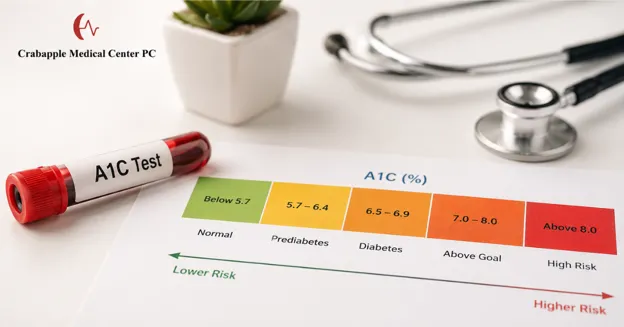
Here is a simple way to understand common A1C numbers:
| A1C | General Interpretation |
|---|---|
| 5.0% | Normal |
| 5.2% | Normal |
| 5.4% | Normal |
| 5.6% | Normal |
| 5.7% | Prediabetes begins |
| 5.8% | Prediabetes |
| 6.0% | Prediabetes |
| 6.2% | Prediabetes |
| 6.4% | Prediabetes |
| 6.5% | Diabetes diagnostic threshold |
| 7.0% | Diabetes range |
| 8.0% | Diabetes range |
| 9.0% | Diabetes range |
| 10.0% or higher | Significantly elevated |
Remember that diagnostic ranges and treatment goals are different.
An A1C of 6.8% would fall within the diabetes range for someone being diagnosed, but a person who already has diabetes may have an individualized A1C goal established by their healthcare provider.
What Does A1C Mean in Average Blood Sugar?
Because A1C is expressed as a percentage, it can sometimes feel disconnected from glucose readings measured in mg/dL.
Healthcare providers can convert an A1C into an estimated average glucose, often abbreviated as eAG.
For example:
| A1C | Estimated Average Glucose |
|---|---|
| 6.0% | About 126 mg/dL |
| 6.5% | About 140 mg/dL |
| 7.0% | About 154 mg/dL |
| 8.0% | About 183 mg/dL |
| 9.0% | About 212 mg/dL |
| 10.0% | About 240 mg/dL |
These values are estimates rather than exact measurements of what your glucose was at every point during the previous months.
Your blood sugar naturally rises and falls throughout the day. An A1C summarizes the overall pattern rather than showing every high and low.
Does an A1C of 6.0 Mean You Have Diabetes?
No.
An A1C of 6.0% falls within the prediabetes range, not the diabetes range.
However, it should not be ignored.
An A1C of 6.0% suggests that average blood glucose has been higher than normal and that you may have an increased risk of developing type 2 diabetes.
Your healthcare provider may review additional factors such as fasting glucose, family history, weight, blood pressure, cholesterol, medications, diet, activity level, and previous A1C results before recommending the next steps.
Is an A1C of 6.4 Diabetes?
An A1C of 6.4% is still classified as prediabetes.
The diagnostic cutoff for diabetes begins at 6.5%.
However, 6.4% is at the upper end of the prediabetes range.
The difference between 6.4% and 6.5% should not be viewed as if your body suddenly changes from healthy to unhealthy overnight. These thresholds help healthcare professionals classify results, but diabetes develops progressively.
An A1C near the diagnostic cutoff usually deserves timely follow-up and a discussion about how to reduce blood sugar.
Is an A1C of 6.5 Definitely Diabetes?
An A1C of 6.5% meets the laboratory threshold used to diagnose diabetes, but the result generally needs confirmation if you do not have clear symptoms.
Your provider may repeat the A1C or perform another diagnostic test.
If two appropriate test results meet diabetes criteria, the diagnosis is considered confirmed. If different tests disagree, your healthcare provider may repeat the test that was above the diagnostic threshold.
Is A1C the Same as Blood Sugar?
Not exactly.
A blood glucose test measures the amount of glucose circulating in your blood at a specific moment.
A1C reflects your average glucose exposure over approximately two to three months.
For example, your fasting glucose could appear normal one morning while your A1C is elevated because you experience repeated glucose increases at other times of day.
The opposite can also occur. NIDDK notes that A1C and other glucose tests occasionally lead to different results, especially when diabetes is developing at an early stage.
That is one reason healthcare providers sometimes use multiple pieces of information rather than relying on one laboratory value.
Do You Need to Fast for an A1C Test?
No.
You do not need to fast for an A1C test.
You can generally eat and drink normally before having your A1C measured.
This makes A1C convenient compared with fasting plasma glucose testing.
However, your provider may order an A1C together with cholesterol, fasting glucose, or other laboratory tests that do require fasting.
So even though the A1C itself does not require fasting, always follow the preparation instructions for your complete blood work order.
Why Does A1C Measure Several Months Instead of One Day?
Red blood cells remain in circulation for roughly three months.
As they circulate, glucose attaches to their hemoglobin.
Higher average glucose means a larger percentage of hemoglobin becomes glycated.
Because your blood contains red cells of different ages, the A1C reflects a rolling picture of glucose exposure rather than one isolated day.
That is why one unusually sugary meal the night before your test will not suddenly change an A1C from normal to diabetic.
Likewise, eating extremely well for two days before the test will not erase months of elevated blood sugar.
A1C is useful precisely because it is much less affected by short-term fluctuations than fasting glucose.
Can Your A1C Change Quickly?
A1C represents several months of blood sugar history, but it is not completely fixed for three months.
Recent blood glucose levels still contribute to the result, so meaningful changes in nutrition, activity, medications, or diabetes treatment can gradually move A1C in the right direction.
Healthcare providers often reassess A1C after enough time has passed to determine whether treatment changes are improving glucose control.
For people living with diabetes, A1C is generally measured at least twice per year and may be checked more frequently when treatment changes or glucose goals are not being met.
What Should Your A1C Be If You Already Have Diabetes?
This is where people often confuse a normal diagnostic range with a treatment target.
For most people living with diabetes, the American Diabetes Association states that an A1C of 7% or less is a commonly recommended target. But A1C goals should be individualized.
Your ideal target may differ depending on factors such as age, duration of diabetes, other medical conditions, risk of low blood sugar, medications, pregnancy, and overall health.
A person with diabetes should therefore follow the target established with their healthcare provider rather than trying to reach a number based solely on a general internet chart.
If My A1C Drops Below 6.5%, Does That Mean Diabetes Is Gone?
Not necessarily.
Someone who has already been diagnosed with diabetes may achieve an A1C below 6.5% through lifestyle changes, medication, weight reduction, or a combination of treatments.
That does not automatically erase the previous diagnosis.
The CDC notes that a person with diabetes who reaches an A1C below 6.5% may have well-managed blood sugar, but the lower number by itself does not necessarily mean the condition has disappeared.
Your healthcare provider should determine how your diagnosis and treatment plan apply to your specific circumstances.
What Causes A1C to Rise?
A rising A1C means that average blood glucose has increased.
There can be many reasons for this.
Insulin resistance is one of the major factors behind type 2 diabetes. When cells respond less effectively to insulin, glucose remains in the bloodstream instead of moving efficiently into cells.
Weight gain, reduced physical activity, changes in diet, certain medications, illness, stress, poor sleep, and progression of diabetes can also influence glucose control.
Crabapple Medical Center discusses the connection between metabolic health, insulin resistance, lifestyle factors, and blood sugar in its existing chronic disease and metabolic health content.
The important question is not simply "Why is my A1C high?" but what is driving the increase in my particular case?
That requires looking at your complete health picture.
Can You Have High A1C Without Symptoms?
Yes.
Prediabetes often causes no clear symptoms at all. The American Diabetes Association notes that many people discover prediabetes only through testing.
Type 2 diabetes can also develop gradually.
This is why routine blood work can identify abnormal glucose levels before someone feels noticeably sick.
Possible symptoms of more significant high blood sugar can include increased thirst, frequent urination, fatigue, blurred vision, increased hunger, unexplained weight changes, or slow-healing wounds.
But waiting for symptoms is not an effective screening strategy.
Preventive testing allows your healthcare provider to identify changes earlier.
Who Should Pay Particular Attention to Their A1C?
A1C testing may be particularly important when you have risk factors for type 2 diabetes.
These can include a family history of diabetes, overweight or obesity, limited physical activity, previous gestational diabetes, high blood pressure, abnormal cholesterol, or previous laboratory results showing elevated blood sugar.
Age also affects screening decisions.
Your healthcare provider can determine how often A1C testing is appropriate based on your overall risk rather than using one schedule for every patient.
Crabapple Medical Center incorporates A1C and fasting blood glucose into routine screening for patients at risk for diabetes.
Can A1C Results Ever Be Wrong?
Yes.
A1C is a valuable test, but it has limitations.
Anything that changes red blood cells or hemoglobin can potentially affect the result.
Conditions that may make an A1C appear falsely high or low include severe anemia, recent blood loss, blood transfusion, kidney failure, liver disease, and certain hemoglobin disorders such as sickle cell disease or thalassemia. Pregnancy can also affect interpretation.
Certain hemoglobin variants can interfere with some laboratory methods.
If your A1C does not match your glucose readings or your clinical situation, your healthcare provider may use another test or investigate factors that could be interfering with the result.
This is another reason not to interpret an unexpected A1C number without clinical context.
Does Iron Deficiency Affect A1C?
It can.
NIDDK notes that significant iron deficiency, including iron-deficiency anemia, can sometimes produce a falsely elevated A1C result.
That does not mean every person with low iron will have an inaccurate result.
It means that your provider should know about anemia or other blood conditions when interpreting an A1C that seems inconsistent with your other glucose measurements.
Does Pregnancy Change A1C Interpretation?
Pregnancy requires a different approach to glucose testing.
A1C may sometimes be used early in pregnancy to identify previously unrecognized diabetes, but it is not the standard test used to diagnose gestational diabetes later in pregnancy.
Glucose challenge testing and oral glucose tolerance testing are commonly used for gestational diabetes screening, usually during the second trimester.
Pregnant patients should follow the glucose testing schedule recommended by their obstetric and primary care teams rather than applying the standard nonpregnant A1C ranges on their own.
What Should You Do If Your A1C Is in the Prediabetes Range?
An A1C between 5.7% and 6.4% is a signal to become proactive, not a reason to panic.
Your provider may first confirm the result or compare it with fasting glucose or another diabetes test.
After that, treatment often focuses on reducing the factors contributing to insulin resistance and elevated blood sugar.
That may include improving food quality and portion balance, increasing regular physical activity, addressing excess weight when appropriate, improving sleep, managing blood pressure and cholesterol, and repeating blood work at recommended intervals.
Prediabetes does not automatically progress to type 2 diabetes. Early intervention can reduce the likelihood of progression.
How Can You Lower Your A1C Naturally?

There is no single food or quick trick that reliably lowers A1C.
Improvement usually comes from changing the overall pattern that influences blood glucose.
Focus on Sustainable Nutrition
You do not necessarily need to eliminate all carbohydrates.
The type, quantity, and combination of carbohydrates matter.
Meals that emphasize vegetables, appropriate portions of high-fiber carbohydrates, lean proteins, and healthy fats can support steadier glucose levels.
Sugary drinks, frequent sweets, and highly refined carbohydrates can make glucose management more difficult when consumed regularly.
Become More Physically Active
Physical activity helps your muscles use glucose and can improve insulin sensitivity.
Regular walking, aerobic activity, and resistance training can all play a role when appropriate for your health and fitness level.
Crabapple Medical Center recommends regular physical activity as part of diabetes prevention and management.
Address Weight When Appropriate
For people with overweight or obesity, even modest weight reduction can improve insulin sensitivity and metabolic health.
Weight management should focus on sustainable changes rather than crash dieting.
Improve Sleep
Poor sleep can interfere with glucose metabolism and insulin sensitivity. Crabapple Medical Center's metabolic health guidance specifically discusses the relationship between inadequate sleep and insulin resistance.
Take Medication as Prescribed
For some patients, lifestyle changes alone are not sufficient.
Diabetes and prediabetes care should be individualized, and medications may be appropriate depending on your glucose levels, medical history, cardiovascular or kidney risk, and other health factors.
Never stop or change diabetes medication based only on a new A1C result without discussing it with your healthcare provider.
Can You Lower A1C Without Losing Weight?
Yes.
Weight loss can improve insulin sensitivity for many people, but it is not the only factor that affects glucose control.
Changes in food choices, physical activity, medication, sleep, stress management, and overall metabolic health can improve blood sugar even when the number on the scale changes only modestly.
The right strategy depends on why your A1C is elevated.
How Often Should A1C Be Checked?
Testing frequency depends on why the test is being performed.
For people without diabetes, your provider may recommend repeat testing based on your age, risk factors, and previous results.
If you have prediabetes, follow-up testing is important because glucose levels can progress over time.
For people living with diabetes, the ADA and NIDDK note that A1C is generally checked at least twice per year. It may be checked more often when medications have changed or when glucose goals are not being met.
Crabapple Medical Center's chronic disease guidance similarly describes regular A1C monitoring as part of ongoing diabetes care.
Is A1C Better Than Fasting Blood Sugar?
Neither test is automatically better in every situation.
They provide different information.
A1C reflects average blood glucose over two to three months and does not require fasting.
Fasting plasma glucose measures your glucose at one specific point after you have fasted for at least eight hours.
A fasting glucose below 100 mg/dL is considered normal, 100 to 125 mg/dL falls within the prediabetes range, and 126 mg/dL or higher meets the diabetes threshold when appropriately confirmed.
Because results can sometimes disagree, healthcare providers may use more than one test to understand your metabolic health.
Why Your A1C Trend Matters
One isolated result gives you useful information.
Several results over time tell a story.
Consider someone whose A1C results look like this:
5.3% → 5.5% → 5.8% → 6.1%
The most recent value is important because it falls within the prediabetes range.
But the gradual upward trend is equally important because it shows that glucose regulation has been changing over time.
The same principle applies in the other direction.
An A1C moving from:
8.4% → 7.6% → 7.0%
may indicate that a diabetes treatment plan is improving average glucose control.
Your provider should evaluate the trend together with medications, lifestyle changes, home glucose readings, symptoms, and other laboratory results.
A1C Testing at Crabapple Medical Center in Alpharetta, GA

Understanding your A1C should involve more than receiving a percentage on a laboratory report.
At Crabapple Medical Center, A1C testing can be incorporated into preventive care, annual health evaluations, diabetes screening, and chronic disease management.
The practice's existing diabetes care program includes HbA1c monitoring, individualized medication management, nutrition and lifestyle counseling, and ongoing patient education. Crabapple Medical Center also reports using in-house laboratory services as part of diabetes screening and chronic disease care.
If your A1C is increasing, falls within the prediabetes range, or is high enough to suggest diabetes, your provider can look beyond the number and evaluate the factors contributing to it.
The goal is not simply to make a laboratory value lower.
The goal is to improve your long-term metabolic health.
Know Your Number Before It Becomes a Bigger Problem
So, what is a normal A1C?
For most people being screened for diabetes:
Below 5.7% is normal.
5.7% to 6.4% indicates prediabetes.
6.5% or higher falls within the diabetes range and generally requires appropriate confirmation.
But your A1C should never be interpreted entirely by itself.
Your age, medical history, medications, glucose measurements, previous A1C values, risk factors, and conditions affecting red blood cells can all influence what your result means and what should happen next.
Know Your A1C, Know Your Health
Not sure what your A1C result means, or overdue for a blood sugar check? Our primary care team at Crabapple Medical Center in Alpharetta, GA can test, explain, and help you plan your next steps.
Early screening can identify changes before symptoms appear and give you more time to protect your health.
Frequently Asked Questions About A1C
What is a normal A1C?
A normal A1C is below 5.7%. An A1C from 5.7% through 6.4% falls within the prediabetes range, while 6.5% or higher meets the laboratory threshold for diabetes.
Is 5.7 A1C considered diabetes?
No. An A1C of 5.7% marks the beginning of the prediabetes range. The diabetes threshold begins at 6.5%.
Is an A1C of 6.0 high?
An A1C of 6.0% is above the normal range and is considered prediabetes. It does not meet the diagnostic threshold for diabetes, but it deserves follow-up and attention to metabolic health.
Is 6.4 A1C diabetes?
No. An A1C of 6.4% remains within the prediabetes category, although it is very close to the 6.5% diabetes threshold. Your healthcare provider may recommend repeat testing and a plan to reduce your risk of progression.
What A1C level means diabetes?
An A1C of 6.5% or higher meets the diagnostic threshold for diabetes. When there are no clear symptoms, another test is generally needed to confirm the diagnosis.